How to play Once Upon a Time

Everyone tells one fairytale together. You steer it toward the secret ending in your hand, and everyone else tries to take the story and steer it toward theirs.

2 to 6 playersAges 8 and upAbout 15 minutes3rd edition

Rules, card list and card graphics from Atlas Games' official rulesheet · atlas-games.com/product_tables/AG1030. Card pictures by Lorc, Delapouite and other artists at game-icons.net, CC BY 3.0.

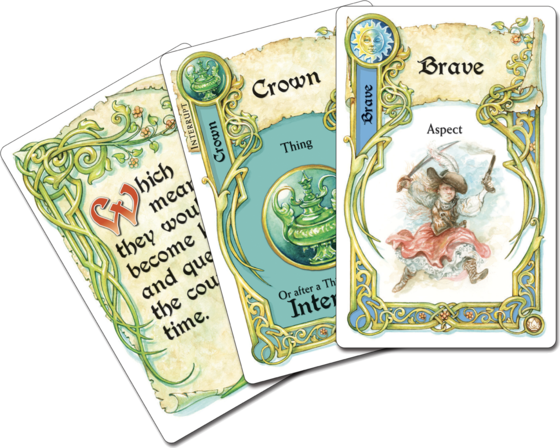
Three real cards fanned out: an Ending, the Crown Interrupt card and the Brave Story card

Watch a game in six moves

An example game with two players, Ana and Ben. The cards are the ones played, in order, as the story is told.

Three ways to take the story

Only the Storyteller talks. Everyone else is listening for one of these three moments, and the first person to act becomes the new Storyteller.

1 · They say your card

The Storyteller says something that's on a card in your hand, like "deep in the forest". Play that card and carry on the story.

Same meaning counts, so "the woods" works too. You can't jump in before they say it.

2 · They play your icon

The Storyteller plays a card with the same icon as an Interrupt card you hold. Play yours and carry on the story.

Only right after a card is played, not just mentioned. The word on your Interrupt card doesn't matter.

"Too long!""No! Silly!"
3 · They lose the thread

The Storyteller stalls for 5 to 10 seconds, rambles, contradicts the story, gets silly or just lists things. Call it out.

No card needed. If it's unclear, the table votes. They draw 1 and the player on their left takes over.

If you get it wrong: a bad interrupt means you discard that card and draw 2. A bad call-out costs nothing. If two people jump in at once, the first card on the table wins.

The whole game in four steps

1Deal

Each player gets 1 Ending card and a hand of Story cards: 11 minus the number of players.

2Tell

The Storyteller tells a fairytale. Say something that's on one of your cards, put the card down.

3Steal

Hear something on your card, or see a card played that matches your Interrupt's category? Take over.

4Finish

Out of Story cards? Read your Ending card. If it wraps the tale up sensibly, you win.

The five kinds of Story card

Every Story card carries one of these icons. Interrupts work by matching the icon.

Your two jobs

When it's your story

Pick up exactly where the last person stopped.

Play a card only when its thing matters to the story, one card per sentence.

Stuck? Say Pass. Draw 1, you may discard 1.

When you're listening

They say something on your card: play it, it's your story now.

They play a card with the same icon as an Interrupt card you hold: play it, it's your story now.

They stall, ramble, contradict or get silly: call it out.

Draw and discard

You got interrupted or called outDraw 1
You passedDraw 1, then you may discard 1
Your interrupt was wrongDiscard it, draw 2
Your ending didn't workSwap it for a new Ending, draw 1

Who starts: flip a Story card. Whoever looks most like it goes first.
Every Story card

All 114 Story cards and 51 Endings, from the publisher's card list. The line under each card is how it tends to come up in a story. Search at the table to check whether something someone just said is a card.

Ending cards

You hold one of these, secretly. It's the last line of the story, and it's what you steer toward all game.

The three kinds of card

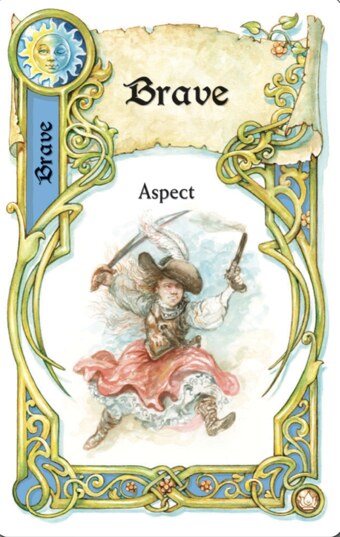
The Brave Story card: title at the top, category below it, picture in the middle

Story card

One fairytale element, like Prince, Forest or Fairy, with its category icon in the top corner. Play it when that element matters in your story.

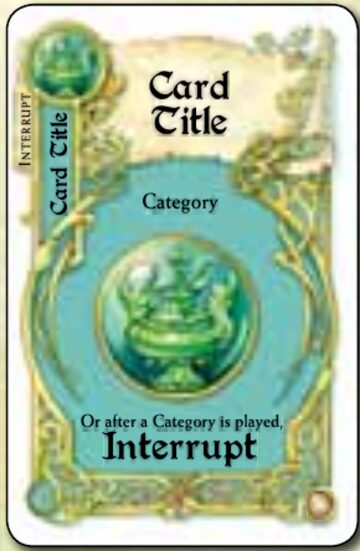
An Interrupt card: same layout, with the word Interrupt across the bottom

Interrupt card

Says Interrupt along the bottom. Play it as a normal Story card, or use it to take over right after someone plays a card of the same category.

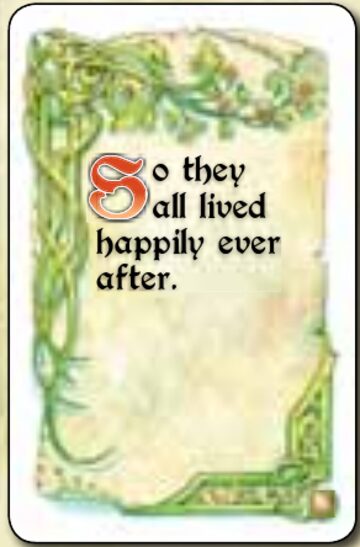
An Ending card: one closing sentence

Ending card

One closing line. Each player gets one and keeps it secret. It's what you steer the whole story toward.

Setup

Make two shuffled decks: an Ending deck, and a Story deck that holds both Story and Interrupt cards. A discard pile builds up as you play.

Deal each player 1 Ending card and a hand of Story cards equal to 11 minus the number of players, with 5 as the minimum.

92 players
83 players
74 players
65 players
56 players

Flip the top Story card, then discard it. The player who looks most like it is the first Storyteller.

Telling the story

The Storyteller can tell the story however they like and isn't limited to what's in their hand. When they mention something on one of their Story cards, they may play it face up on the table. The played cards form a line that shows the story so far.

A card only counts if its element gets its own sentence and matters to the story. A passing mention doesn't count.

Counts

"Once upon a time, there was an evil king who lived in an indestructible palace at the top of a distant mountain."

Any of these can be played. They're central to the story.

Doesn't count

"On his way he saw villages with horses, stepmothers and frogs, and giants, wolves and talking giraffes."

Named in passing, so none of these can be played.

The Storyteller keeps talking until someone takes over. Playing every card in one turn is possible, but very hard.

Passing

The Storyteller can end their turn whenever they like by saying Pass. They draw 1 Story card, then may discard 1 they don't want. The player on their left becomes the Storyteller.

Taking over the story

With a Story card

The Storyteller says something that's on a card in your hand. Play it and you're the Storyteller.

The words don't have to match, as long as they mean the same thing. You can't jump in on something they haven't said yet.

With an Interrupt card

The Storyteller plays a Story card, and you hold an Interrupt card with the same category icon. Play it and you're the Storyteller. Its own element is ignored.

It only works after a card is actually played, not just mentioned. You can't interrupt a card that was itself used to interrupt.

Example

"After digging for hours, he finally uncovered the hidden treasure." The Storyteller plays Treasure, a Thing.

Played: a Thing
Works: Thing Interrupt
Doesn't: Aspect Interrupt

Only the icon of the played card counts. "Hidden" was said, but nobody played a Hidden card, so an Aspect Interrupt can't take over.

After a takeover, the old Storyteller draws 1 and leaves their last card on the table. The new Storyteller puts their card next to it and carries on the same story, consistently.

Calling out the Storyteller

StuckA pause of 5 to 10 seconds
Contradicting"Wait, the king is dead. The dragon ate him."
RamblingTalking a long time without moving the story on
SillyToo ridiculous even for a fairytale. "Sausage, will you marry me?"
ListingNaming things just to dump cards

Most groups just shout "Too long!" or "No! Silly!". If it isn't obvious, the others vote. A good call ends the turn: the Storyteller draws 1 and play passes left. If their last card didn't really happen in the story, it goes back in their hand.

A gentle nudge usually does the job. Don't use call-outs to block whoever is winning, and never to pick on younger players.

When a takeover goes wrong

Wrong call-outNo penalty
Wrong interruptDiscard the card you tried, draw 2
Two people jump in at onceFirst card on the table wins, no penalty for the other
Too lateOnce another card is played, the earlier one is safe
Can't agreeThe players not involved vote

Ending the story

Once you've played every Story and Interrupt card in your hand, read your Ending card to finish the tale. If it makes a sensible, satisfying ending, you win.

If the table rules it doesn't work, discard it, draw a new Ending, draw 1 Story card, and play passes left. Be generous, especially with kids. Only reject an ending that's clearly nonsense. Nobody can interrupt an Ending card.

Next game. Whoever has the most cards left starts, shuffles and deals.

Rulings from the designers

Holding back a card you heard mentioned, so you can jump in later, is fair tactics.

If the Storyteller plays Wicked and then says "witch", it's too late to take over with Witch on that line. Wait for it to come up again.

Variants worth trying

Multiple Endings

Deal two Ending cards. Either one can win.

Exchanging Endings

When you pass, you may swap your Ending for a new one, but you draw 2 Story cards instead of 1.

Slap Stopper

You can't play two cards of the same category in a row.

Tales for Tots

Take out the Interrupts, or take out the Endings and win by playing your last card.